For most small-space vegetable gardeners, a 10-gallon fabric grow bag is the best starting point. It gives many compact tomatoes, peppers, eggplants, broccoli and similar crops useful root room without becoming as difficult to fill as a very large container. Smaller 2- to 5-gallon bags make more sense for herbs and greens, while taller 10- to 15-gallon formats are better for potatoes, carrots and deeper root systems.
This is a proper product review, but it is a published-specification review rather than a made-up hands-on test. I compare the five products by documented capacity, dimensions, fabric, handles, rings, crop fit, construction details and format. The editorial scores are explained below so you can see what the number means.
How this review was scored
Each product receives a GardenWorkbench editorial score out of five. The score is not a customer star rating, and it does not imply that GardenWorkbench physically tested the bags. It summarizes five published-spec questions: Are the specifications clear? Does the construction information help a buyer compare it? Does the capacity match a realistic vegetable job? Is the handling design practical? Does the product format give a small-space gardener useful flexibility?
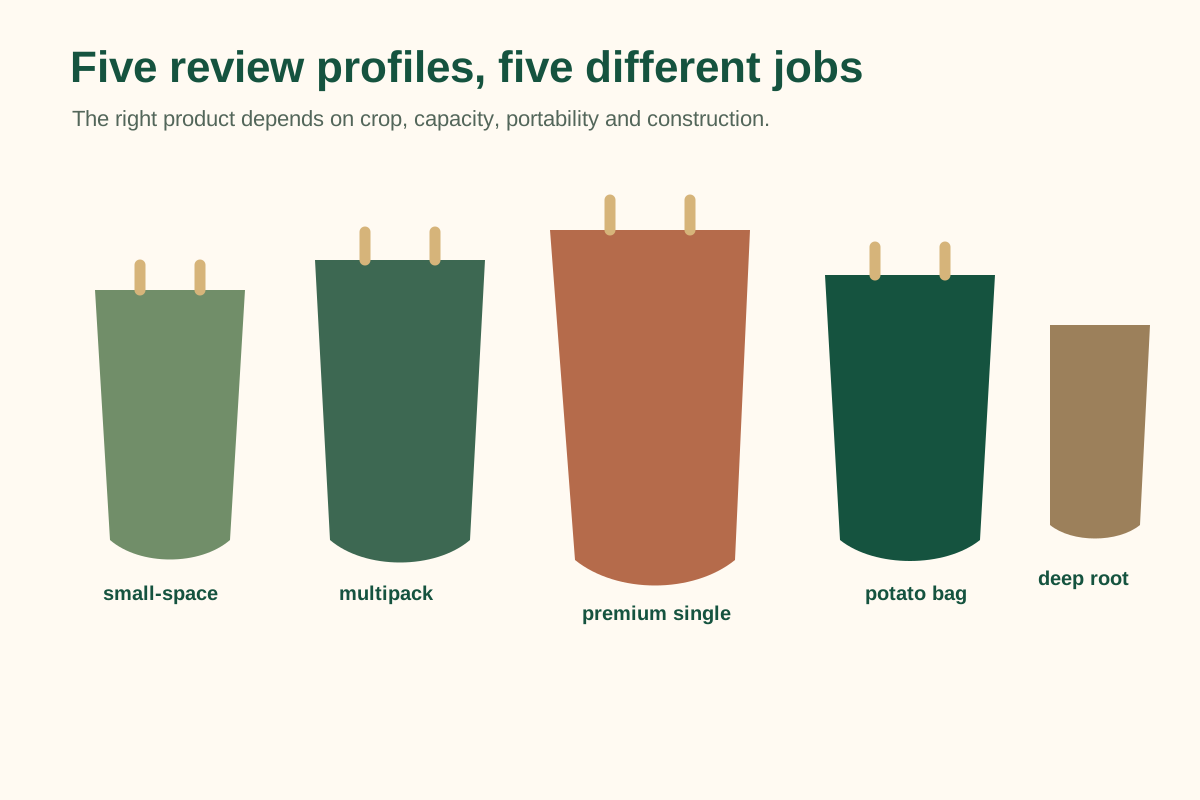
| Product | Editorial score | Verified specifications | Best for | Buy |
|---|---|---|---|---|
| VIVOSUN 10-Gallon 5-Pack | 4.8/5 Editorial | 5 bags · 10 gal each · 15.7 × 15.7 × 11.8 in · 360g nonwoven fabric · metal rings · reinforced handles | Best for a multi-container patio setup | Buy now |
| Smart Pot 10-Gallon | 4.7/5 Editorial | 10 gal · 16 in diameter · 11.5 in tall · about 1.34 cu ft · geotextile fabric · BPA- and lead-free | Best for one established reusable planter | Buy now |
| Gardzen 10-Gallon Potato Grow Bags | 4.6/5 Editorial | 10 gal format · heavy-duty fabric · webbing handles · potato-focused design; verify exact height and harvest window for the selected variant | Best for potatoes and taller root crops | Buy now |
| Bootstrap Farmer 10-Gallon Grow Bag | 4.5/5 Editorial | 10 gal · about 14.5 in diameter × 14 in tall · 350 GSM polypropylene · listed food-safe and BPA-free | Best for shoppers comparing fabric specifications | Buy now |
| AC Infinity 5-Gallon 5-Pack | 4.4/5 Editorial | 5.39 gal true capacity · 11 in tall × 12 in diameter · 500G nonwoven fabric · steel ring · nylon handles · reinforced stitching | Best for compact vegetables and smaller spaces | Buy now |
Product reviews
VIVOSUN 10-Gallon 5-Pack
- Best for
- Best for a multi-container patio setup
- Specifications
- 5 bags · 10 gal each · 15.7 × 15.7 × 11.8 in · 360g nonwoven fabric · metal rings · reinforced handles
Pros
- Strong feature set for the price format
- Metal rings support training and trellising
- Flat base and reinforced handles are useful for setup
Cons
- A filled 10-gallon bag is heavy to move
- Pack details can vary by listing
Smart Pot 10-Gallon
- Best for
- Best for one established reusable planter
- Specifications
- 10 gal · 16 in diameter · 11.5 in tall · about 1.34 cu ft · geotextile fabric · BPA- and lead-free
Pros
- Clear published dimensions and crop guidance
- Established fabric-planter design
- Made in USA according to the listing
Cons
- Single-pot format may cost more per container
- The standard version may not include handles
Gardzen 10-Gallon Potato Grow Bags
- Best for
- Best for potatoes and taller root crops
- Specifications
- 10 gal format · heavy-duty fabric · webbing handles · potato-focused design; verify exact height and harvest window for the selected variant
Pros
- Designed around a specific crop job
- Handles and taller profile suit potato projects
- Useful choice when harvest access matters
Cons
- Specifications vary between product variants
- A full potato bag is not easy to relocate
Bootstrap Farmer 10-Gallon Grow Bag
- Best for
- Best for shoppers comparing fabric specifications
- Specifications
- 10 gal · about 14.5 in diameter × 14 in tall · 350 GSM polypropylene · listed food-safe and BPA-free
Pros
- More specific fabric-density information than many listings
- Multiple sizes support a consistent garden system
- Useful for shoppers who want material details
Cons
- Check color and pack size before checkout
- The exact offer can change by variant
AC Infinity 5-Gallon 5-Pack
- Best for
- Best for compact vegetables and smaller spaces
- Specifications
- 5.39 gal true capacity · 11 in tall × 12 in diameter · 500G nonwoven fabric · steel ring · nylon handles · reinforced stitching
Pros
- Published technical specifications are unusually clear
- 500G fabric and reinforced stitching are useful construction details
- Compact size suits herbs, greens and peppers
Cons
- Five gallons may restrict large tomatoes or eggplants
- Smaller bags can need more frequent moisture checks
Which size should you buy?
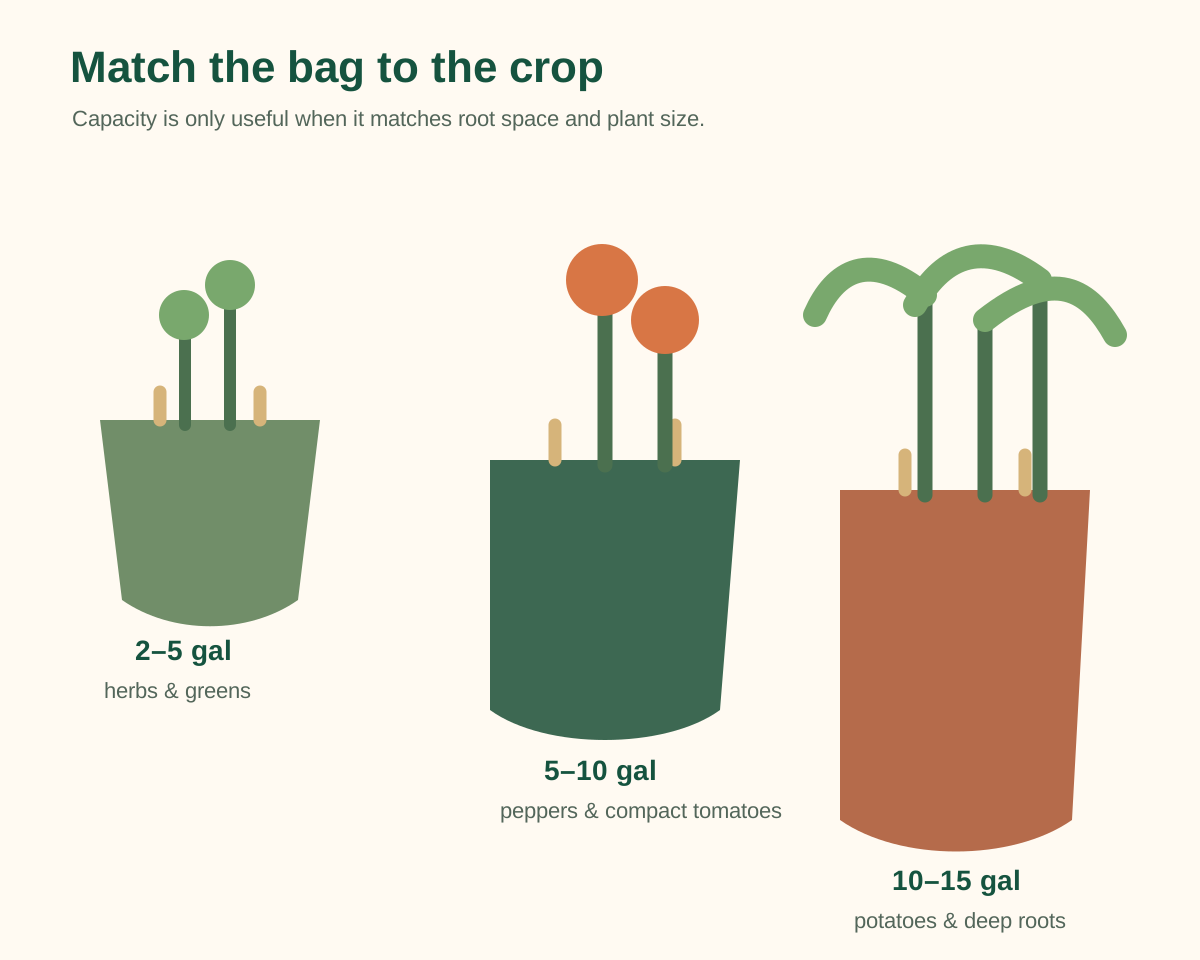
Choose the bag after choosing the crop, not the other way around. A small transplant can look comfortable in a 3-gallon container and still outgrow it quickly. Herbs and salad greens usually need less root volume. Peppers, compact tomatoes, eggplants, broccoli and cabbage are often easier to manage in the 5- to 10-gallon range. Potatoes, carrots and other deeper crops need usable height as well as volume.
| Crop group | Useful starting range | What to watch |
|---|---|---|
| Herbs and leafy greens | 2–5 gallons | Watering access and surface area. |
| Peppers and compact tomatoes | 5–10 gallons | Support, sunlight and mature canopy. |
| Broccoli, cabbage and eggplant | 10 gallons | Room for roots and regular watering. |
| Potatoes and deep roots | 10–15 gallons | Height, loose mix and harvest access. |
Soil, drainage and watering
Use a lightweight container mix instead of heavy garden soil. Garden soil can compact inside a fabric container and reduce air space. A mix with potting media, compost and an aeration component such as perlite or pumice is easier to manage, but the exact recipe should follow the crop and local conditions.
Fabric containers drain freely, which helps prevent standing water, but that same airflow can increase drying in hot sun or wind. Leave room around each bag so water can escape. Do not place a breathable bag in a saucer that stays full of water. Use the soil calculator guide to estimate the volume for a multi-bag setup, and review the small-garden drip irrigation guide before adding tubing.
Common buying mistakes
- Buying a 5-gallon bag for a large indeterminate tomato without planning support.
- Assuming a handle means a full bag is safe to move.
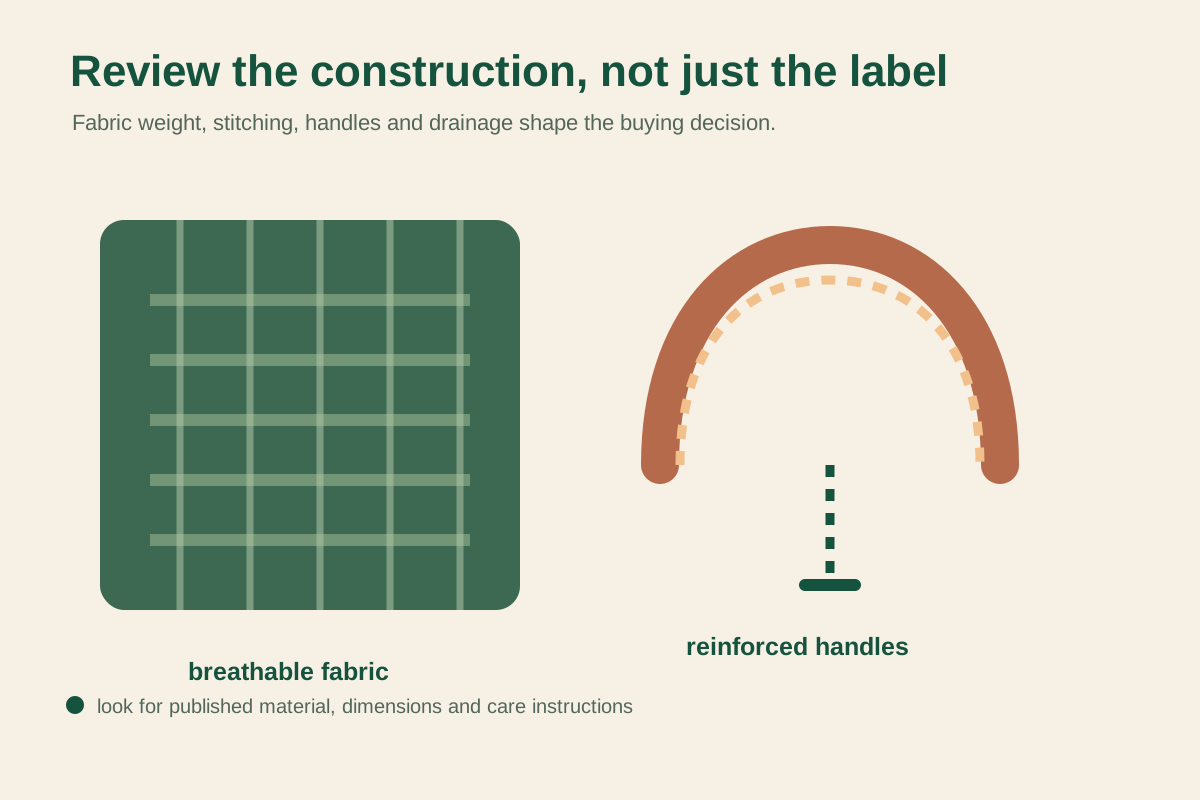
- Comparing only the word “heavy duty” instead of fabric density, dimensions and stitching.
- Ignoring food-use information when the container is for edible crops.
- Buying a large pack before confirming where runoff will go.
- Forgetting that larger bags need more growing medium and a permanent location.
Final verdict
VIVOSUN is the strongest multi-container choice in this lineup because its current product page publishes a useful mix of capacity, fabric, rings, handles and pack information. Smart Pot is the cleanest choice when you want one established reusable planter with clear dimensions and crop guidance. Gardzen makes the most sense for a potato-focused project. Bootstrap Farmer is attractive when fabric-density information matters, and AC Infinity is the most compact, technically specified option for herbs, greens and peppers.
Grow-bag questions, answered
1. Are grow bags good for vegetables?
Yes, when the capacity matches the crop and the site can handle regular watering and drainage. They are not automatically better than rigid pots in every climate.
2. What size grow bag is best for tomatoes?
About 10 gallons is a practical starting point for many compact tomatoes. Larger indeterminate varieties may need more root volume and a stable support.
3. Do grow bags dry out faster than plastic pots?
They can, especially in hot sun and wind. Check moisture more often and plan the watering route before filling the bag.
4. Can grow bags be reused?
Many can be reused when the fabric, seams and handles remain sound. Empty, clean and dry the bag before checking it for damage.
5. Should grow bags sit on concrete?
They can, provided excess water has somewhere to drain and runoff will not damage the surface.
6. Do grow bags need saucers?
Usually not. A saucer can catch runoff, but standing water can cancel the drainage advantage of the fabric.
Useful Sources And Verification
Verify current specifications and local growing guidance before buying:
- VIVOSUN product page for current pack, fabric, ring and handle details.
- Johnny’s Selected Seeds Smart Pot listing for 10-gallon dimensions and crop guidance.
- Smart Pot official product page for material and food-growing information.
- AC Infinity official product page for true capacity, dimensions, 500G fabric, ring and stitching details.
- UC Marin Master Gardeners for bag sizes, food-safe materials and growing guidance.
- Virginia Tech Extension for container depth, drainage and crop selection.
Gardzen and Bootstrap Farmer variants can change by listing. Confirm the exact product page, size, pack count and current availability before updating affiliate copy.